As artificial intelligence continues to evolve at an unprecedented pace, concerns about the future of jobs are becoming more real than ever. Adding to this conversation, Ben Goertzel, widely known as the “Father of AGI (Artificial General Intelligence)”, has issued a strong warning: the world may be just two to three years away from human-level AI, and that could fundamentally change how work exists today.
According to Goertzel, once AGI becomes a reality, most human jobs could become obsolete, as machines would be capable of performing tasks faster, better, and more efficiently than humans. While this transformation may not happen overnight, he emphasizes that the shift could be rapid enough to disrupt millions of careers globally.
What Is AGI and Why Does It Matter?
Artificial General Intelligence (AGI) refers to machines that can perform any intellectual task that a human can do, unlike current AI systems that are limited to specific functions.
Goertzel believes that once AGI reaches maturity:
- Machines could outperform humans in most professions
- Entire industries may undergo massive transformation
- The traditional concept of “jobs” may change completely
However, he also points out that this transition will include an adjustment period, similar to how generative AI became mainstream after 2022 but took time for widespread adoption.
Will All Jobs Disappear?
Not entirely. Goertzel suggests that certain roles—especially those centered around human interaction, such as teaching, caregiving, and mentoring—may continue to exist even in an AGI-driven world.
Interestingly, he highlights that predicting which jobs will disappear first is not straightforward. For example:
- Some creative and professional roles (like graphic design or legal research) are already being impacted
- Meanwhile, hands-on jobs like electricians or plumbers remain relatively stable
This unpredictability makes one thing clear: traditional career advice is becoming outdated.
A New Vision of the Future
Goertzel also paints a more optimistic picture of the future. In a world where machines handle most work:
- Humans could spend more time with family and loved ones
- People may focus on personal growth and emotional fulfillment
- Concepts like Universal Basic Income (UBI) could support livelihoods
- Work may become optional rather than necessary
In such a scenario, the real question shifts from “What job will you do?” to “Who will you become?”
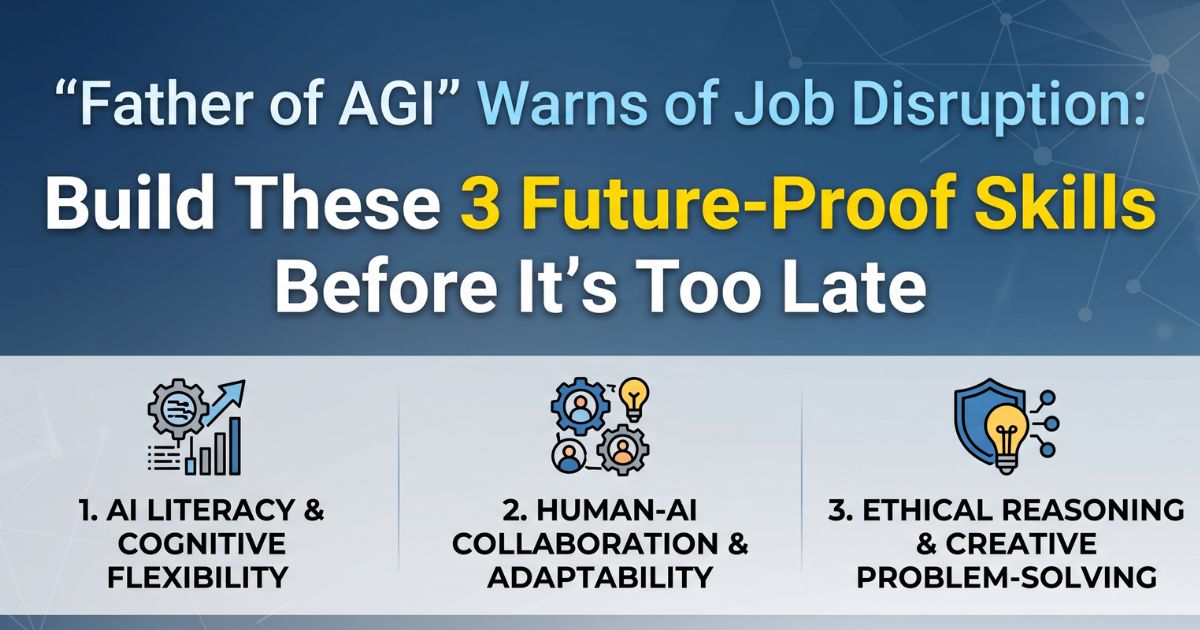
The 3 Skills You Must Build to Stay Relevant
To prepare for this uncertain future, Goertzel recommends focusing on three critical skills that are less likely to be replaced by machines.
1. Human Relationship & Communication Skills
As AI takes over technical and repetitive tasks, human connection will become the most valuable asset.
Skills to focus on include:
- Emotional intelligence
- Effective communication
- Active listening
- Building trust and rapport
Even today, strong networking and personal connections often matter more than technical skills in many situations. In an AI-driven world, this trend is expected to grow even stronger.
2. Ability to Adapt and Pivot Quickly
The second key skill is adaptability. Goertzel emphasizes the need to “pivot rapidly” as industries evolve.
This means:
- Continuously learning new skills
- Staying updated with industry trends
- Being open to changing careers if needed
- Investing in regular upskilling
For example, if a role becomes automated, individuals must be ready to transition into fields where human involvement is still essential.
Adaptability is already one of the most in-demand skills globally, and its importance will only increase in the coming years.
3. Being Comfortable With Yourself
Perhaps the most unexpected skill on the list is self-awareness and personal comfort.
Goertzel suggests that in a future where work is no longer central to identity, people must learn to:
- Enjoy their own company
- Understand their emotions and values
- Live in the present moment
- Build meaningful connections beyond work
This shift is significant because many people today define themselves by their jobs. In a post-work world, identity may need to come from within rather than from a profession.
What Should You Do Right Now?
While AGI may still be a few years away, the warning is clear: start preparing today.
Here are some practical steps:
- Focus on developing soft skills alongside technical ones
- Build a strong professional and personal network
- Stay flexible in your career planning
- Invest in continuous learning
- Prioritize mental well-being and self-awareness
FAQs
1. What is AGI?
AGI (Artificial General Intelligence) refers to AI systems that can perform any intellectual task like a human.
2. Will AI really replace all jobs?
Not all jobs, but many roles could be automated, especially repetitive and technical tasks.
3. Which jobs are safest in the future?
Jobs involving human interaction, creativity, and emotional intelligence are likely to remain relevant.
4. What is the most important skill for the future?
Human relationship-building and adaptability are considered the most critical.
5. When could AGI become a reality?
Experts like Ben Goertzel suggest it could happen within the next 2–3 years, though timelines may vary.